
KimshiSchools

The rules shape the timetable

Kimshi applies the rules that govern your school as part of the timetabling process—not as checks added at the end.

National conditions set firm boundaries. Local agreements and school policies supply the detail. Kimshi brings them together with your curriculum, staffing, rooms and working week.

When something does not fit, Kimshi shows what is preventing it, where the constraint comes from and what can happen next.

Teacher reviewing planning notes at a classroom desk

Teacher contracts and contact time

A free period in the timetable does not necessarily mean that a teacher is available to teach.

Kimshi calculates each teacher’s available class-contact time from their contract, full-time equivalent, working days, fixed commitments and, where applicable, induction status. It applies the relevant national conditions, including limits on class contact and protected preparation and correction time.

These limits are checked while the timetable is being built and again when staffing, cover or the timetable changes.

SourceSNCT Handbook Part 2, Section 3

School staff discussing a timetable during a meeting

Your school’s working time agreement

Every school has its own Working Time Agreement, operating within the terms agreed by its local negotiating committee. Kimshi uses the agreement that applies to your school rather than relying on a generic model.

Collegiate time, remitted time, reserved capacity, working patterns and other agreed commitments are included when staff availability is calculated.

Agreements are versioned. A change made during the year does not rewrite the basis on which an earlier timetable or decision was made.

SourceYour school’s Working Time Agreement and the applicable LNCT agreement

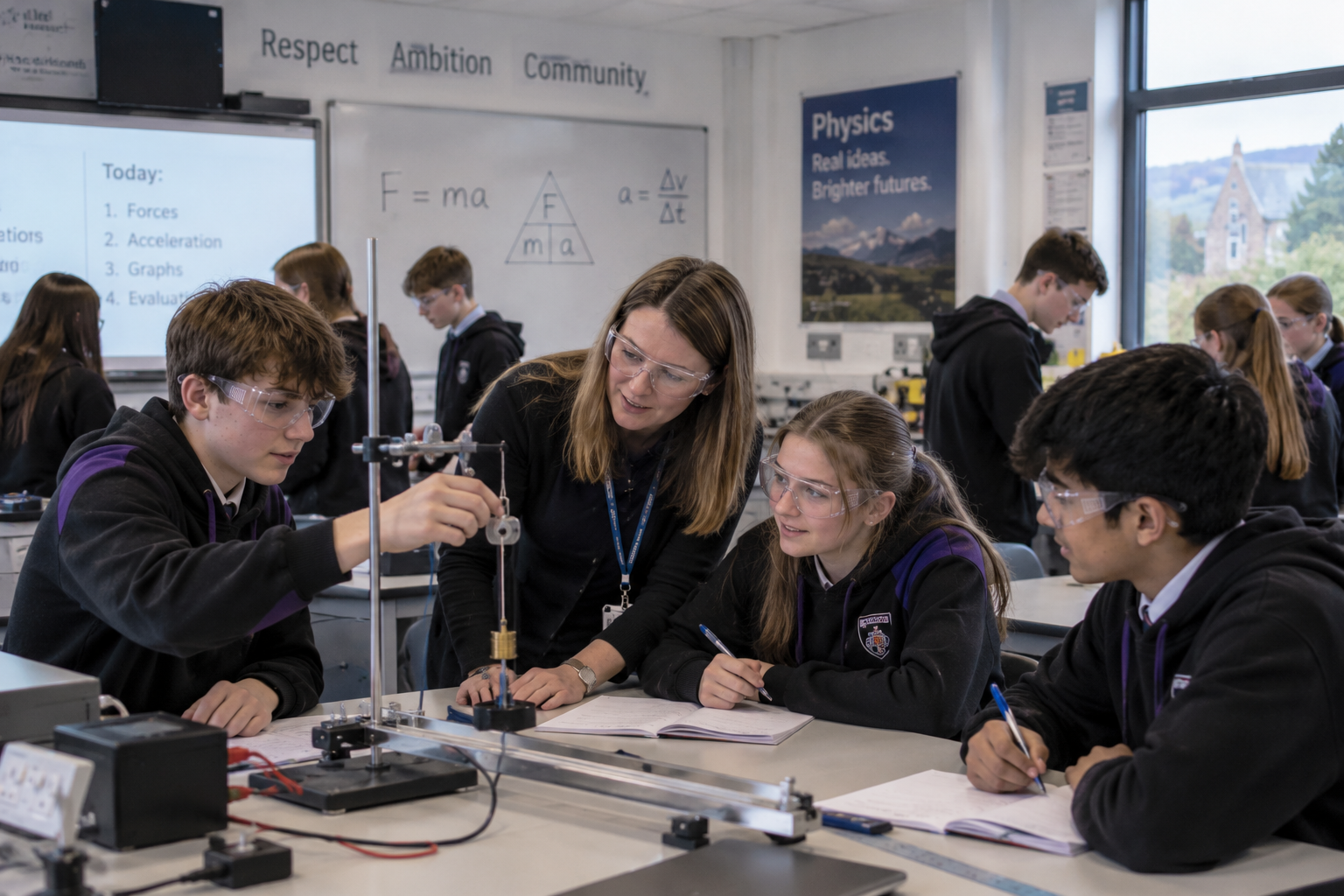
Teacher supporting pupils during a practical physics lesson

Class sizes

Class-size limits depend on the stage and the subject being taught. Kimshi applies the relevant maximum when classes are formed and whenever pupil numbers change.

Practical-class status comes from the SNCT subject list; it is not inferred from the room in which a lesson happens. Where no national minimum class size applies, the school can set its own viability threshold.

If a class is already full, Kimshi treats that as a real constraint and explains what is preventing another pupil from being added.

SourceSNCT Handbook Appendix 2.9

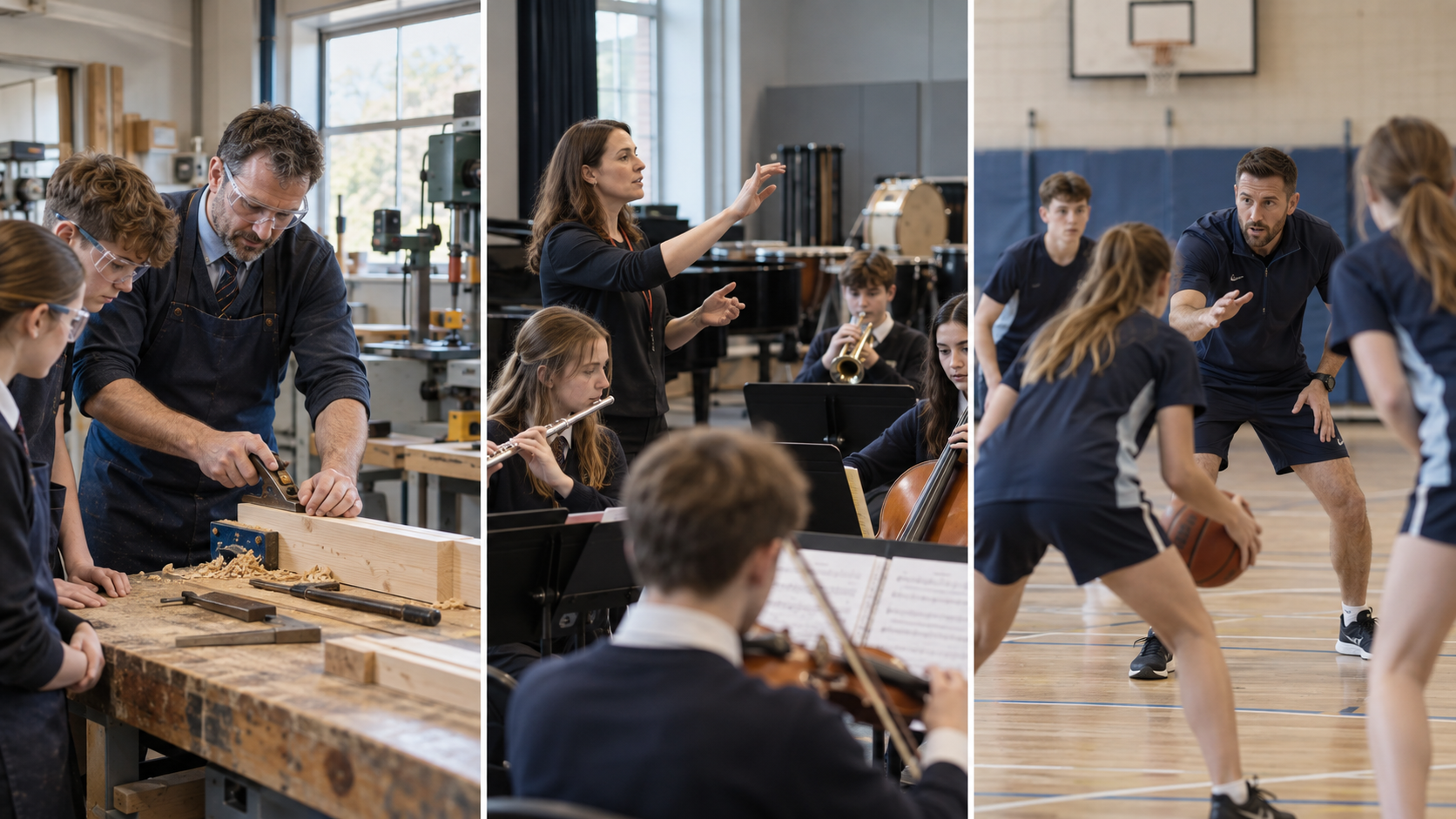
Specialist teachers leading technical, music and physical education lessons

Subjects matched to qualified teachers

Kimshi matches each subject with teachers who are registered to teach it. It uses the school’s current registration records—not department membership or previous allocations—to identify suitable teachers.

The same checks apply when building the timetable, making changes and arranging cover, so subjects remain assigned to appropriately qualified teachers.

When a teacher’s registration changes, the updated record is applied from that point onwards.

SourceGTCS Scotland guidance on registration categories and teaching eligibility

School leaders reviewing timetable constraints on screen and paper

When something does not fit

Kimshi does not treat every blocker as the same kind of constraint.

An arrangement may be physically impossible—for example, when two classes need the same single room at the same time. It may breach a national or contractual rule. Or it may fall outside a policy that the school itself controls. Information may also be missing, in which case Kimshi reports the result as unverified rather than assuming that everything is acceptable.

Kimshi identifies which of these situations applies, shows the figures behind it and names the source of the constraint.

Where an authorised exception is possible, the tool shows who has the authority to approve it and records the decision and reason. Where no exception can make the arrangement work, it says that the underlying inputs must change.

Your data stays under the school’s control

Kimshi is built around UK GDPR principles of data protection by design and by default, including data minimisation.

Kimshi-operated services do not collect, receive or store your school’s pupil or staff records. The application runs within the school and processes only the information needed to test feasibility and build the timetable.

SEEMiS or another authoritative school system remains the source of record. Identifiable information remains in the school-side application, under the school’s own access controls.

This architecture supports the school’s data-protection responsibilities while keeping its information under its control.

SourceICO guidance on data protection by design and by default, and data minimisation